Student Learning Outcomes
- Student will be able to apply Ohms law to simple circuits.
- Student will learn how to pick a fuse for a simple circuit.
- Student will learn to calculate Watts from amps and volts.
- Student will learn to control simple DC motors including their speed and direction using an HBridge? or Motor Shield.
- Student will learn to control Stepper Motors, and Hobby Servos.
- ?Student will assemble a “motor shield” kit.
- Student will learn about Pulse Width Modulation (PWM)
- Student will integrate motors into their project.
- Student will learn to consider types of movement as an aesthetic parameter
Motor Shield
- Exercises 1. Learn to control speed and direction of your DC motors using PWM pins. Demonstrate this in class or with video.
- Learn to use a hobby servo. Demonstrate this in class. 3. Learn to use a stepper motor. Demonstrate this in class or with video. Stepper motors will be available.
Exercises due on class 19
- Make a body to hold the two motors, a omni directional wheel, battery, and arduino is due on day 21.
Make your car demonstrate through motion one of the following states,
- Indecisiveness
- Nervousness
- Impulsiveness
- Drunkenness
- Decisiveness
- Fear
- Calm
Extended Tutorials
https://learn.adafruit.com/all-about-leds/what-are-leds-used-for KVL (Kirchhoff's Voltage Law)
- Transistor control of motor
Lectures, Demonstrations
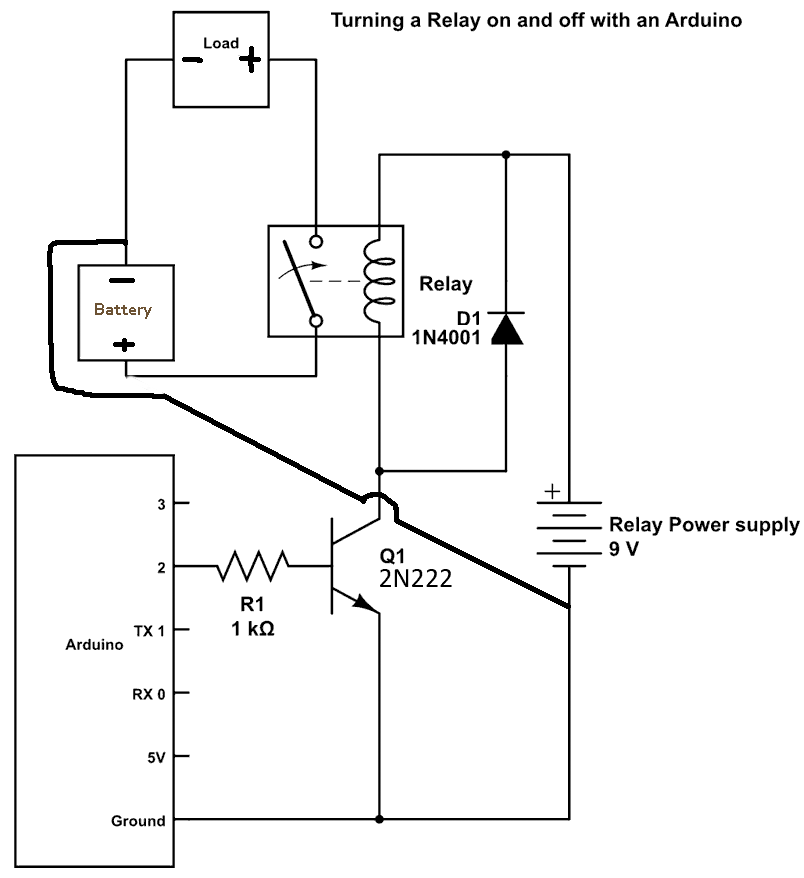
Relays and Transistors as Switches
Ohms Law, determining current, sizing fuses. Kirchhoff’s law and simple LED circuits.
PWM