Editing Katz.ConstructionTechniques?
Author:
[Emphasized (italic)] [Strong (bold)] [Link to internal page] [Link to external page] [Attach file] [Big text] [Small text] [Superscript] [Subscript] [Heading] [Center] Images are mostly from Wikipedia https://en.wikipedia.org/wiki/Breadboard
Circuits use to often be built on boards. If no wooden boards not in use were available, a bread board might have been used.
- Solderless Breadboard These are easy, multiple use devices. They are often the first way a circuit is tried out and will be used in my Toolkit Class.

- Printed Circuit Prototyping Board These are nice for one off circuits. The soldered connections are more reliable than solderless breadboards. They are often layed out in the same manner as solderless breadboards.
- Wire Wrap - Wire wrap is a great technique if there are a lot of integrated circuits to connect.
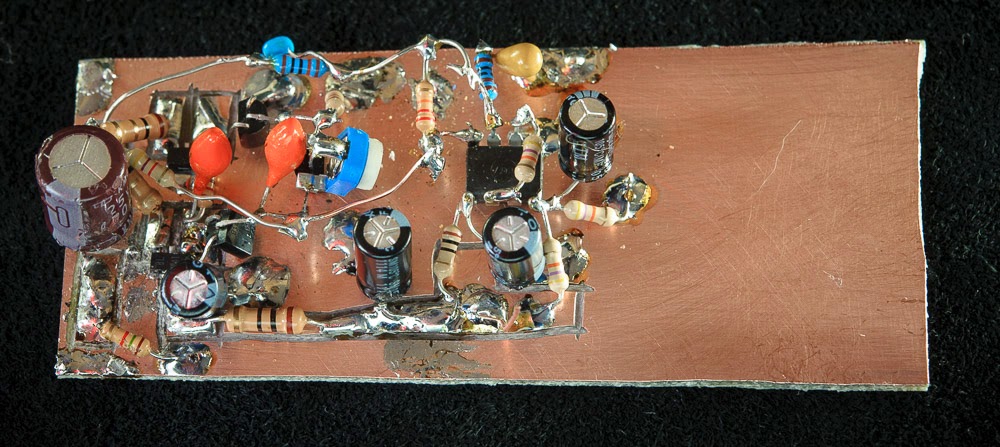
- Dead Bug - This is when integrated circuits and transistors are glue to a board on their backs with their legs standing up.
- Manhattan - The circuit board is the ground plain or power. Small squares of circuit board are glued on top of the ground plain to provide connection points for other components. This sometimes looks like city blocks, hence "<Manhattan".
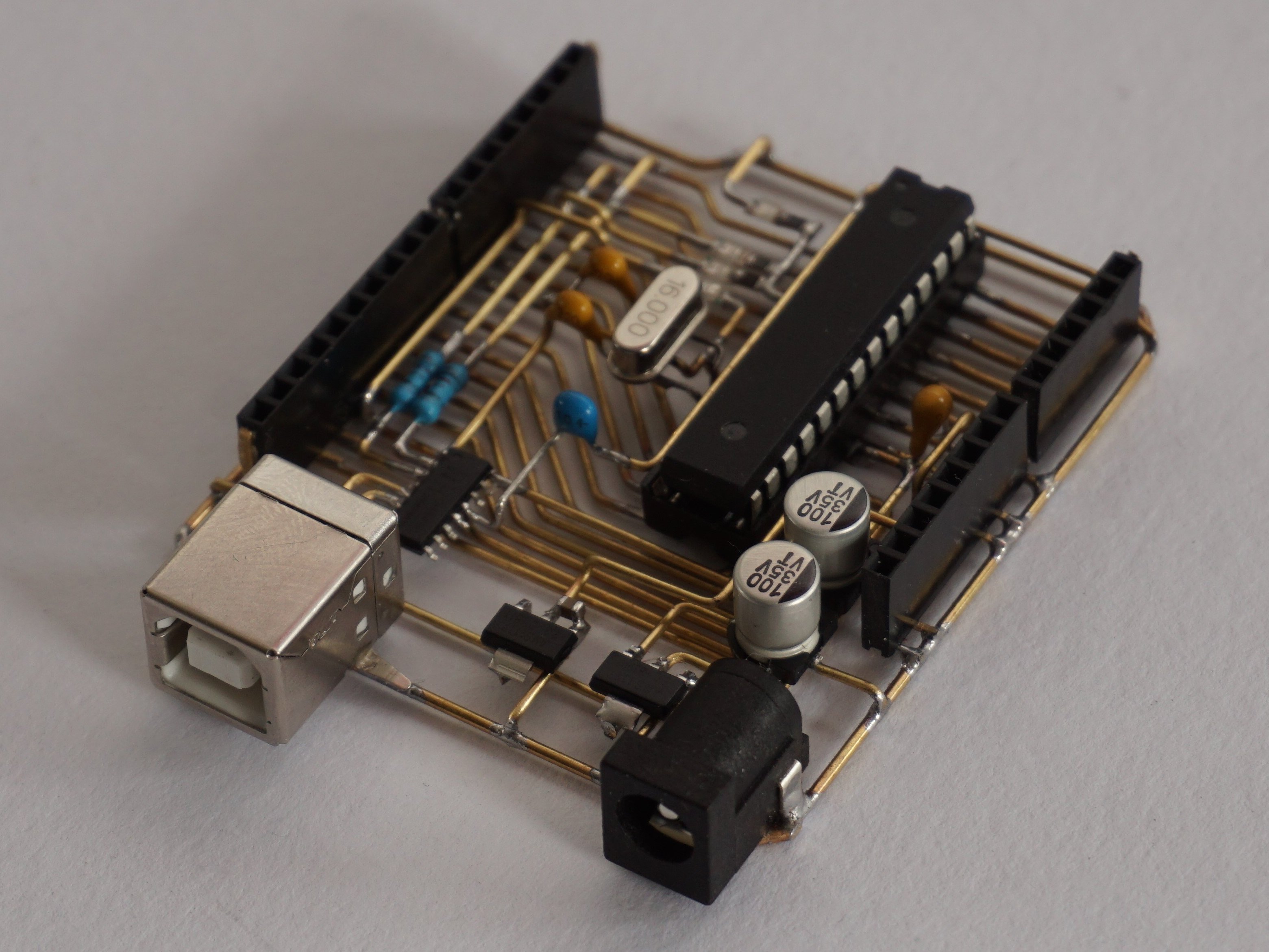
- Free Form This is usually done with rigid wire. Circuits are bent of wires.
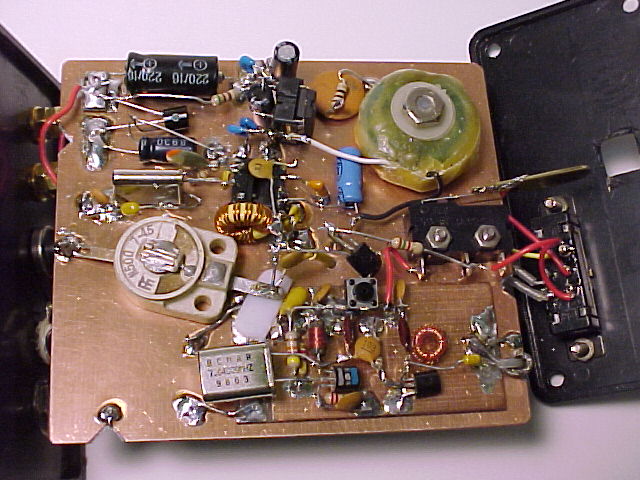
- Ugly - Ugly is a design style that can have elements of any of the above but does not seem to follow any one technique. It does not even require a board.
Summary:
This is a minor edit
    Edit
    Page History
    Source
    Attach File
    Attributes
    Group Attributes
Page last modified on December 01, 2020, at 07:09 PM CST
Powered by pmwiki-2.2.140 modified by Rita Sperry (Configuration)